Mostrando entradas con la etiqueta childabduction. Mostrar todas las entradas

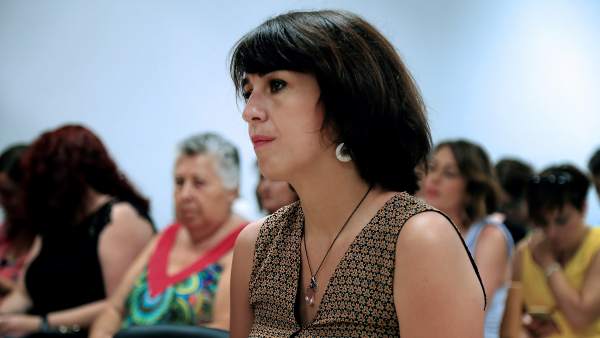
Juana Rivas entrega sus dos hijos a su expareja en Italia

Juana Rivas

Juana Rivas ha entregado este jueves sus dos hijos, de 12 y 4 años, a su expareja, el italiano Francesco Arcuri, en una comisaria de Cagliari, la capital de Cerdeña, después de que el domingo pasado se negara a devolvérselos, informaron a Efe fuentes de la defensa de Arcuri. 

La entrega se produjo después de que Juana Rivas se reuniera este miércoles con el cónsul general de España en Roma, Luis Fernández Cid, en Cagliari y después de haber tenido que comparecer de nuevo ante la Policía para declarar sobre la denuncia que interpuso contra Arcuri por supuestos malos tratos al menor de los hijos. El martes pasado, Arcuri ya había denunciado a Rivas por no entregarle a sus hijos en el plazo acordado. 

Arcuri, quien tiene la custodia provisional de los pequeños desde agosto de 2017, volverá ahora con sus hijos al municipio italiano de Carloforte, en la isla de San Pietro, al sur de Cerdeña, donde residen habitualmente. Plazo vencido Juana Rivas tendría que haber entregado a sus hijos el 21 de octubre a Arcuri, que fue condenado en 2009 en España por maltrato y a quien Juana volvió a denunciar en 2016. Sin embargo, no hizo la entrega como "medida de precaución", tras presentar una denuncia a la Policía italiana contra Arcuri por supuestos malos tratos. El pasado viernes, Arcuri entregó los niños a Rivas y la madre vio que su hijo menor se quejaba de dolor en la parte baja de la espalda, donde presentaba un hematoma, explicaron a Efe fuentes jurídicas. 

Juana fue con él al hospital de San Michele, en Cagliari, y, según contaron los dos pequeños, el moratón era consecuencia de un enfado del padre, que empujó al menor contra los hierros de la cama porque no podía dormir y después lo alzó y lo lanzó contra una pared, dijeron las mismas fuentes. Rivas tiene derecho a permanecer con sus hijos siete días consecutivos mientras está en Italia y se acogió a este derecho para no devolver a los niños a su expareja. 

Por su parte, Arcuri también denunció a la madre ante la Policía italiana y pidió a la Justicia que ordenara la entrega inmediata de los menores para que pudieran volver a la escuela en Carloforte. Arcuri, además, solicitó que se suspendiera el derecho de visitas de Rivas o que estas se hicieran con vigilancia. El miércoles, el cónsul general de España en Roma se trasladó a Cagliari para conversar con Rivas sobre la situación. Una vez finalizada la reunión con el cónsul, se recibió una notificación de la Policía de Cagliari para que Juana se personara con sus hijos en sus dependencias, lo que hizo al instante, y allí se le informó de la denuncia interpuesta por Arcuri. 

El pasado 27 de septiembre se celebró la última vista del proceso civil que decide en Italia a quién de los dos progenitores corresponde la custodia de los menores, que comenzó en noviembre de 2017 en el Tribunal de Cagliari, sin que aún haya emitido un fallo. Condenada a 5 años Rivas ha sido condenada en España a cinco años de prisión y seis sin la patria potestad de sus hijos por sustracción de menores, después de que hace dos veranos incumpliera las resoluciones judiciales que le obligaban a entregarlos al padre, al que acusa de malos tratos. 

La sentencia no es firme y ha sido recurrida por su defensa. El equipo que asesora a esta madre de Maracena (Granada) ha señalado en un comunicado remitido a Europa Press que, tras las "últimos episodios" ocurridos, el tribunal civil que lleva el tema de la custodia ha fechado la escucha del hijo mayor, de doce años, para el 13 de noviembre, pero mantienen que esto no es acorde con las "exigencias de protección y de inmediatez" que "los hechos denunciados requieren".

Fuente 20 minutos

Juana Rivas no entrega a sus hijos a su expareja en Italia y denuncia un supuesto maltrato a uno de ellos


La española Juana Rivas no ha entregado a sus hijos, de 12 y 4 años, a su expareja, el italiano Francesco Arcuri, y ha interpuesto una denuncia ante la Policía italiana por presuntos malos tratos del padre al menor de los niños. 

Lo ha hecho en Cagliari (Italia), donde está con ellos y ha pedido medidas judiciales urgentes de protección. Fuentes cercanas al caso explican este lunes que Rivas tendría que haber entregado a los niños el domingo pero que no lo hizo. 

Las mismas fuentes explican que la mujer tiene derecho a permanecer con los pequeños siete días consecutivos mientras está en Italia y que hasta ahora había estado con ellos solo el fin de semana, por lo que "está utilizando este derecho". Según fuentes de la defensa de Rivas, el padre entregó a los niños a la madre el pasado viernes y esta descubrió, según ha hecho constar en la denuncia, un hematoma en la espalda del pequeño. Está en Italia para activar los procedimientos judiciales que tiene en este país. Rivas, condenada a cinco años de prisión y seis sin la patria potestad de sus hijos por sustracción de menores en España, ha solicitado como "medida cautelar urgente" que los niños vayan a una "casa familia", un centro público para casos en los que hay riesgo de violencia, mientras la autoridad judicial examina la denuncia y su fundamento. 

Los niños permanecen con la madre, conforme han explicado también desde su equipo jurídico, en el marco del derecho que tiene esta última a tenerlos, en sus estancias en Italia, durante siete días consecutivos seguidos, siempre y cuando vayan al colegio, a unas dos horas de Cagliari, extremo este último que no se ha producido este lunes, ante este "hecho grave" que se "está denunciando". En Italia está abierto también el procedimiento para decidir sobre la custodia de los niños. La mujer ya presentó hace unas semanas una denuncia sobre supuesto maltrato del padre a los niños y permanece "sin tramitarse" en este país la denuncia por presunta violencia de género que puso en Granada en verano de 2016 y que fue remitida al país alpino.

II Congreso del Abogado del Niño


El pasado 12 de Octubre participamos como ponentes en el II Congreso del Abogado del Niño realizado en la Facultad de Derecho de la Universidad de Buenos Aires.

Agradecemos al Dr. Solari y a su equipo el haber seleccionado nuestra ponencia sobre "El Abogado del Niño en Alemania".

Japan on U.S. list of nations noncompliant with Hague Treaty

WASHINGTON (Jiji Press) — The U.S. State Department on Wednesday listed Japan as one of countries showing a pattern of noncompliance with the so-called Hague Treaty that sets procedures to settle cross-border parental child abduction cases.

Japan joined the Convention on the Civil Aspects of International Child Abduction in 2014, and it is the first time since then that the nation has been put on the list in the department’s annual report on the issue of children taken by one parent following the breakup of international marriages.

The listing may help put greater pressure on Japan to comply with the treaty, pundits said.

The 2018 report said Japan has made “measurable progress” on international parental child abduction, noting that the average number of children reported abducted to the country each year has decreased by 44 percent since 2014.

While noting that “a strong and productive relationship” between the Japanese and U.S. governments has facilitated the resolution of abduction cases, the report said that “there were no effective means” to enforce court return orders.

As a result, 22 percent of requests for the return of abducted children under the treaty remained unresolved for more than one year, the report said, adding the enforcement process is “extremely long.”

A total of 12 countries, also including China, India, Brazil and Argentina, were on the 2018 list of countries showing a pattern of noncompliance.

“Now is an opportunity for the government of Japan to demonstrate a true commitment to reforming its inability to enforce its own judicial rulings,” said Jeffery Morehouse, who is seeking to gain custody of his son in Japan.

Paul Toland, who hopes to reunite with his daughter in Japan, said, “Japan will need a complete reform of their family law system and will have to change the way they view the rights of a child to know and love both parents after a divorce if they ever want to be compliant with the Hague [treaty].”

Lawmaker: U.S. needs to pressure Japan to comply with international child abduction laws


Japan remains a haven for parental child abductions and a U.S. lawmaker Wednesday urged the Trump administration to do more to pressure the country to fulfill its obligations under international law.

Rep. Chris Smith, R-N.J., said during congressional testimony that between 300 and 400 children of international marriages have been abducted from the U.S. to Japan since 1994, and that more than 35 are still awaiting reunification with their American parents.

“Every day these children are separated from their U.S. parent, the damage compounds,” Smith said before a Congressional subcommittee on global human rights. “We must do better. We must not leave any child behind.”

Under international pressure, in 2014 Japan signed The Hague Convention on International Child Abduction. The treaty requires the government to set up a process to allow foreign parents to appeal for visitation or return of their children. But Japan has been slack in administering the convention, according to Smith.

“How many of these children have come home four years later?” asked Smith. “How many even have access to their left behind parent now? Almost zero.”

James Cook, a Minnesota medical device specialist trying to gain custody of his four minor children from his estranged Japanese wife, also testified before Congress. 

In July 2014, his Japanese wife Hitomi Arimitsu took their children to Japan to visit her family and refused to return. Cook submitted an application for return under the Hague treaty and the case has made its way through both the Japanese and American court system, but Cook has still not been able to see his children.

A Minnesota court ordered the return of Cook’s children in 2017, but the ruling wasn’t carried out in Japan.

A key issue is that Japan does not have a way of enforcing its Hague commitments. It requires the abducting parent to voluntarily turn the children over and doesn’t allow the use of force in extracting the children. There have been numerous cases of parents simply refusing to comply with the Hague rulings.

Cook’s wife petitioned a Japanese court against the ruling to return the children and it was overturned, a decision which Japan’s Supreme Court upheld in December 2017.

“[My wife] has achieved the perfect consequence-free abduction with the aid of Japan’s systemic non-compliance and [the US Department of State’s] inaction,” Cook said in his testimony.

“After over 2.5 years in this process, I have nothing,” he said. “This process has cost me everything.”

Attention to the issue within Japan has been growing in recent weeks. Last month, all EU Ambassadors to Japan signed an official letter of diplomatic protest to pressure Japan to follow international law and enforce decisions which give an international parent custody or visitation rights.

Also in March, Japan’s Supreme Court ruled that a Japanese mother who is refusing to return her child to their father in the United States is "illegally restraining" the child under the Hague Convention.

It was the first such ruling by a Japanese court.

The court ruling and international pressure are a cause for optimism, according to John Gomez, an American who is chairman of the Kizuna Child-Parent Reunion group in Japan.

Gomez said that barriers remain, including an underlying “continuity principle” in Japanese courts means that the abducted child stays with the abducting parent. 

“Until the ‘continuity principle’ by which judges in Japan issue rulings is actually discarded and kidnapped children are returned, we must keep pushing to the utmost for the children to be returned to their loving parents,” said Gomez.

Rep. Smith said in his testimony that the State Department needs to apply more pressure on Japan and other countries that have refused to cooperate in returning abducted children. A 2014 law that Smith sponsored, the Goldman Act, requires the State Department to develop an agreement with Japan about children that had been abducted and to hold Japan accountable. 

However, Smith said that no action has been taken against Japan for past or current cases, and the State Department hasn’t even listed Japan as “non-compliant” in its annual report on the Hague convention.

“We hope that the State Department will do its job and implement the Goldman Act,” Smith said. “We hope that the Trump Administration will be different than the last.”

Fuente Usa Today

UK Desperate dad makes public appeal to find twin daughters abducted by ex


A desperate dad is making a public appeal to find his twin daughters abducted by his ex.
Care worker Peter Linney, 41, has not seen 13-year-old Georgia and Olivia since mum Michelle McGinlay took them against his will to South Africa in March 2016.

She and her bouncer boyfriend Pietro Confalone are now on the run with them.
The girls have been made wards of court in the UK and South African authorities have been hunting for the family after their visas ran out two years ago.

Peter, who has spent his £20,000 life savings trying to track them down, said: “I just want my girls back. I spend every waking moment thinking about them.”

His nightmare began shortly after he split from McGinlay, 42, in 2006, having the girls to stay with him every other weekend.
“But whenever she got a new bloke, she’d be difficult about me seeing the twins,” says Peter.

In January 2016 he got a call from McGinlay’s eldest daughter from a previous relationship warning him her mum and South African Confalone, 55, were planning to emigrate with the girls.

When he confronted the pair they claimed it was just a three-week holiday – but in an anonymous call from a man two days later he was told they had one-way tickets.

Frantic Peter got his lawyer to warn McGinlay she would be breaking the law if she took their daughters abroad without his written consent. A month later McGinlay made a second attempt, calling Peter from Heathrow demanding permission. Again he refused.

“She used my refusals to brainwash the girls against me,” he says. “She told them I was trying to stop them going on holiday. They hated me for that. She urged them to ring me and be nasty, calling me ‘the sperm donor’. It was so upsetting.”

In March, they were gone. Peter found the girls had not been at school for a week so he contacted police who discovered McGinlay and Confalone had got the girls on a Gatwick flight to Dubai.

Peter, of East Grinstead, Sussex, says: “I can only think they must have faked my signature on a forged affidavit.”

He got the children made wards of court. Since then he found out where his daughters were with the help of the International Child Abduction Contact Unit, but he believes the South African authorities bungled paperwork and failed to have McGinlay arrested.

The family then disappeared – and Peter says the only clues he now has to where they are come from McGinlay’s mum, Maureen.

“She has told me they’re in an area called Hartbeespoort, but Michelle won’t tell her the address.

“I have no money left to travel to South Africa to look for them myself. Until I find them, I’ll never be happy.”

Sussex Police say they are working on the case. A spokesman said: “Extradition proceedings have been considered but are not being carried out at this time in consideration for the welfare of the children.”

Japan: (Eng subs) Racist journalists discussing about the Hague Convention.


We are in 2018, but here is the racism that you still find in the Japanese society nowadays.
Enjoy these two journalists commenting on the first ever decision made by the Japanese Supreme Court to return a kidnapped child to the father. 
For the first time in history, the Hague Convention has been correctly applied in Japan, despite the fact it took 2 years to reach this decision rather than the 6 weeks implied by the convention.

Estamos en 2018, pero aún hay racismo en la sociedad japonesa de hoy. Estos dos periodistas comentan la primera decisión tomada por el Tribunal Supremo Japonés sobre la devolución de un niño secuestrado al padre en US, llaman a la Convención de La Haya, una Convención estúpida y cuestionan como se puede permitir la devolución del niño a un país de gente "blanca". Según los periodistas, que Japón haya suscripto el convenio fue  algo innecesario.
Por primera vez en la historia, la Convención de La Haya se aplicó correctamente en Japón, a pesar que se demoraron 2 años en obtener esta resolución en lugar de las 6 semanas que menciona el Convenio. Subtítulos en Inglés.

Top Court: Boy must return to father in U.S


The Yomiuri ShimbunIn the first ruling of its kind in Japan, the Supreme Court has decided that refusing to return a child despite an order based on the Hague Convention is “tantamount to illegal confinement” of that child.

Since Japan joined the convention in 2014, a number of parents have refused to comply with court-issued orders to return children, which observers have pointed out has turned these orders into dead letters. Thursday’s ruling by the Supreme Court is expected to give the orders more effectiveness and will likely influence similar custody cases.

The top court’s First Petty Bench made the ruling in an appellate trial that questioned whether a parent could reject a court order to return a child who had been brought to Japan issued in line with the Hague Convention that stipulates how to deal with children taken to another country after their parents’ marriage breaks down.

In this case, a habeas corpus appeal had been filed by a father living in the United States, demanding the return of his 13-year-old son, who is living in Japan with his mother.

According to the ruling, the marriage of the parents — who are both Japanese and had lived in the United States — broke down, and the mother returned to Japan with her son in 2016. The father filed a suit demanding the boy’s return under the Japanese act for implementation of the convention, and a return order was finalized by the Tokyo High Court.

However, the mother repeatedly refused to return the boy, so the father filed a habeas corpus appeal.

Regarding whether the mother’s action of not returning the boy amounted to illegal confinement, the petty bench said, “Serious consideration should be given to whether the parent who took the child was exerting undue psychological influence on the child.” As the son was living in a situation where he had to rely on his mother during his daily life, the court recognized that “it could not be said he was staying in Japan of his own free will.”

Furthermore, the court indicated that a parent’s failure to comply with the return order “would be clearly illegal unless there were exceptional circumstances under which returning a child would be considered improper.” The court decided the mother’s refusal to return her son was illegal.

In a ruling issued in November 2017, the Nagoya High Court’s Kanazawa branch threw out the father’s claim, saying, “The will of the son, who wishes to live in Japan, should be respected.” The Supreme Court overturned this decision and sent the case back to the Kanazawa branch to move ahead with proceedings to return the boy to his father.

Hague Convention

The Hague Convention on the Civil Aspects of International Child Abduction spells out international rules that, in principle, ensure that a child who is taken to another country by a parent without permission is returned to the country of their former habitual residence. If a child is brought to Japan, the parent living in the country of former habitual residence can file a lawsuit at the Tokyo or Osaka family court to demand the child’s return. A child’s return will not be authorized in certain situations, such as when there are concerns the child could be abused.

Bouncing back - How does international parental abduction affect children?


The network of Cross-border Family Mediators coordinated by Missing Children Europe brings together 170+ family mediators worldwide who are trained in resolving cross-border family conflicts such as parental abduction. Visit us www.crossbodermediator.eu

Japanese Supreme Court Renders Decision on Hague Abduction Convention

La imagen puede contener: 1 persona, interior

On December 21, 2017, the Japanese Supreme Court rendered a decision on the Hague Abduction Convention. The Court upheld a lower court decision in favor of the Japanese mother, even though she had turned back on her promise to return the kids from a visit to Japan, and even though that same court had earlier issued a return order in favor of the American father. The matter had receivedinternational press attention, and even a Congressional subcommittee hearing.

Japan had long refused to join the Hague Convention, and when it did, in 2014, critical observers already expected that courts would find ways to undermine it. Those observers see themselves vindicated.

Colin Jones reports critically on the decision; he has previously written on Japan’s joining the Convention and on reluctance to enforce it. Useful background from the Law Library of Congress is here.

Japanese accession to the Convention has been a frequent scholarly topic, both in Japan and elsewhere. Yuko Nishitani, who had already written about “International Child Abduction in Japan” in (2006) 8 Yearbook of Private International Law 125-143, and who wrote a long report (in Japanese) for the Japanese Ministry in 2010, provided a brief analysis in 2011. Dai Yokomizo discussed the accession in (2012) Revue critique 799; Jun Yokohama did so in the Mélanges van Loon (2013, pp 661-72). Vol. 57 (2014) of the Japanese Yearbook of International Law contains articles by Tatsuki Nishioka and Takako Tsujisaka, Masayuki Tanamura, Masako Murakami, Martina Erb-Klünemann, and Nigel Vaughan Lowe. Takeshi Hamano helpfully explains the Japanese reluctance with regard to the Japanese ideology of the family. Outside of Japanese authors, Barbara Stark and Paul Hanley wrote most recently in the United States; the topic is also addressed in several student notes. The accession was also discussed by Bengt Schwemann (in German) and Francisco Barberán Pelegrín (in Spanish).

Call to end loophole one parent to remove a child from country without permission

CAMPAIGNERS are calling for an end to a 'kidnapper's charter' which enables a parent to remove children from Scotland without the other parent’s permission.


While in England this would be regarded as a criminal offence under the Child Abduction Act 1984, a loophole in Scots Law means police are powerless to act unless there is a court order in place.

Solicitor Yousif Ahmed is now urging the Holyrood administration to urgently close the loophole in a bid to ensure parents and children across the UK have the same protection and rights.

The 29-year-old became involved after coming across the case of a father whose infant son had been taken to the Middle East without his knowledge or permission.

Mr Ahmed has now been in touch with Justice Secretary Michael Matheson and has already won the backing of Reunite International, a charity specialising in international parental child abduction.

In the last year alone they have been contacted by Scots parents - mainly fathers - whose children had been taken to nations including India, Pakistan, Thailand, Sudan, Uganda, Vietnam, Australia, Canada, Italy and South Africa without their permission.

Although the Hague Convention provides a potential method of returning to an abducted child from one member country to another, only 98 states have ratified it.

Mr Ahmed, an associate with Cannons Law Practice in Glasgow, said the current law simply was “not fit for purpose” and added: “With the world growing smaller, international relationships are becoming more common but if such a relationship breaks down it is ultimately the children who may end up paying the highest price by losing all contact with a parent and their friends.

“With the exception of Scotland, the rest of the United Kingdom rightfully criminalises the wrongful act of parental child abduction. That is a form of deterrence firmly in place.

“Surprisingly, we do not have that deterrence here – parental child abduction is not recognised as a criminal offence unless a court order has been obtained prohibiting the removal of a child and that in itself raises various problems and issues.

“To obtain such a court order, you must have some prior knowledge of a pending or imminent abduction and go through a formal legal process which in most cases is not fit-for-purpose, nor effective for preventing parental child abduction from Scotland.

“We also have a distinct lack of protocol and practice for preventing parental child abduction where an abduction is suspected as being likely – what that means is that without a court order, there are is no scope of alerting police to put in place port alerts or red flags which can alert UK Border control of a child being at risk of parental child abduction, unlike in England and Wales where a system of protocol and practice is in place to help prevent this from happening.”

Mr Ahmed has met with MSP Mary Fee, a Labour member of the Holyrood Justice Committee, and has been promised face-to-face talks with Mr Matheson or his officials before the end of the year.

The matter was previously raised with First Minister Nicola Sturgeon through her constituent Peter Hansen when his children were taken to Japan by his estranged wife without his knowledge.

Last night Alison Shalaby, from Reunite, said: “We recently received a call from a concerned parent who feared their child was being removed from Scotland without their permission.

“It was heartbreaking to tell them there was nothing we could do. Had the parent been in England we could have alerted the police and the ports to prevent from that child from leaving.

“But because of the anomaly in Scots law it is currently not possible unless there is a court order in place and for that you need to have prior knowledge this could be happening.

“What Yousif is doing in incredibly important as it will hopefully lead to better understanding of the situation and increase awareness because these cases are hugely under reported.

“In vast majority of cases it is the mother who decides to return to their country of origin after their relationship breaks down and they want to take their child or children with them.

“Unfortunately little regard is paid to the parent left behind or indeed the harm that can be done to a child removed from their social circle, school, friends and other family members.”

A Scottish Government spokeswoman said: “There is already legislation in place making it an offence in Scotland for a person connected with a child under 16 to take or send the child out of the UK without the appropriate consent where a court order is in place awarding custody of the child to another person or prohibiting removal of the child from the UK.”

'Starting to lose hope': Father reunited with missing children after three years


Harry Speath last saw his 8-year-old, Serena, and 7-year-old, Thomas, in December 2014, when they disappeared in what authorities have described as a parental abduction.

This month marked the third anniversary of Serena’s and Thomas’s disappearance and Mr Speath was preparing to spend his fourth Christmas without his beloved children.

But after a lengthy search and investigation, Australian Federal Police carried out a recovery order issued by the Federal Circuit Court and returned the siblings to Mr Speath on Wednesday.

“It has been a very emotional time,” Mr Speath told A Current Affair.
“I was starting to lose hope, truthfully, and I guess that came about after the third anniversary.

“It was particularly difficult as that time came and went.”

Speaking exclusively to A Current Affair, an emotional Mr Speath described the three years he spent without his children as “very distressing” and said he was “overjoyed” to finally have them returned.

“It really means pretty much everything to me,” he said.

“It's the most important thing in my life, to be involved in raising my children. What's more important than your children?"

In a statement the AFP said: “Officers yesterday located and recovered parentally abducted siblings Serena and Thomas Speath in Queensland after a three-year investigation.

“The siblings had been missing since December 2014 and the Federal Circuit Court of Australia issued a recovery order in 2015. Police enquiries lead to the recovery of the sibling’s yesterday morning.

“The AFP would like to thank the public and media for their continued interest and support in the matter.”

Before the children were found the AFP previously released digital age-progression images to show how Serena and Thomas may have looked compared to when they were last seen.

A Current Affair interviewed Mr Speath in 2015, six months after the children went missing.

After being reunited following three years of heartache, Mr Speath said he was grateful for the efforts of the AFP.

“The AFP I think have been brilliant all through (the process). They really have done everything that they possibly could in the circumstances,” he said.

The AFP have asked to public for any information relating to other cases of missing children around Australian.

El rol de las autoridades centrales en el marco del deber de cooperación de los Estados

Por Jonathan Fernández

El presente trabajo, apuntará a analizar las cuestiones atinentes al deber de cooperación de los Estados en el marco de las diversas convenciones con especial enfoque en el caso argentino, ahondando en el rol que desarrollan las autoridades centrales en los aspectos civiles de la restitución internacional de menores. Así también, tras el análisis de los diversos cuerpos normativos y guías y modelos se propondrán algunas cuestiones que merecen ser reguladas y que han quedado expuestas tras el desarrollo jurisprudencial existente en la materia.
El estado argentino como estado requerido

El Estado argentino actúa como requerido cuando recibe la petición de restitución o visitas de un menor que se encuentra o se presume que se encuentra en su territorio. En este caso, también existe dos supuestos: si se conoce la localización del niño o no.

En el primer caso, y cumplimentados los requisitos de los convenios internacionales que resulten aplicables, se procederá a contactar al progenitor que se encuentra con el menor a los fines de acercarse el mismo y lograr un procedimiento de restitución voluntaria extrajudicial, antes de llevar el caso a la justicia (faz contenciosa). Es común que ante la intervención judicial se produzca una escalada del conflicto lo cual atenta contra el interés superior del niño que se intenta ubicar y proteger.

En tal caso, se envía una nota al progenitor sustractor, para que recapacite y restituya al menor en forma voluntaria (o en su caso se fije un régimen de visitas), explicándosele las consecuencias que acarreará su negativa. Para evitar demoras se le otorga un plazo de 10 días para responder. A estos fines, las autoridades centrales frecuentemente sugieren intervención de profesionales avezados en ese tipo de situaciones, propician comunicaciones telefónicas o mediante videollamadas por Skype o medios similares.

De no resultar el proceso de restitución voluntario, se judicializarán las actuaciones en la jurisdicción que corresponda según la normativa que resulte aplicable. Es importante poner de manifiesto, que las autoridades centrales pueden ofrecer nóminas de abogados de la matrícula y guiar a los peticionantes sobre el procedimiento, pero no hacen las veces de patrocinantes de los mismos. Su función es más bien administrativa e informativa.

En nuestro país, y en general en la mayoría de los Estados, cuando un particular no puede afrontar el gasto que demanda un abogado del foro ante el cual reclama, y tras demostrar la falta de recursos, puede acceder a un Defensor Oficial. La autoridad central, más allá de la judicialización del caso, sigue oficiando como nexo, comunicando e informando a las partes intervinientes.

En el caso de no conocerse el paradero del menor, se procede a dar intervención a INTERPOL. En todos los casos, debe tenerse presente, tal y como apunta la Dra. Najurieta que “… la decisión final sobre el reintegro del niño queda en manos de la autoridad competente del Estado de refugio” y que decidir sobre la procedencia o no del pedido de restitución no guarda relación alguna con cuestiones como quien tiene el ejercicio de la responsabilidad parental o cuidados personales del menor.

La cooperación internacional apunta a aunar esfuerzos en pos de la protección de la niñez infancia y adolescencia ante los desplazamientos transfronterizos de los padres y sus hijos en casos de ruptura familiar.

En ese sentido, las convenciones a nivel mundial y regional, tanto como las leyes modelos, guías de buenas prácticas y el protocolo de actuación para el funcionamiento de los convenios de sustracción internacional de niños, en consonancia con el acopio jurisprudencial de la Corte Suprema argentina disponen medidas eficaces de prevención y gestión ordenada de las sustracciones internacionales de niños.

Más allá de ello, restan aún tomar cartas en el asunto para lograr la homogenización de los procedimientos y una actuación coordinada de las autoridades centrales, que puedan brindar no sólo asistencia jurídica y administrativa, sino también financiera, contando con autonomía técnica y autárquica y preconizando el avenimiento de las partes en aras disminuir las consecuencias perjudícales del procedimiento, en términos de costos y tiempo, además de no perder el norte que debe guiar al mismo: el interés superior del niño. Por ello, reiteramos la propuesta de la utilización de los métodos alternativos para el abordaje de conflictos como modo de acercar a las partes, centrándose en sus intereses cuando ello sea posible.

En lo que a las respuestas jurisprudenciales concierne, la CSJN ha demostrado un trazo uniforme y consecuente en lo que hace a la correcta interpretación de los convenios en la materia en general, enarbolando tanto el principio del interés superior del niño, como la autonomía del procedimiento, y el rol de las partes intervinientes, resguardando la responsabilidad internacional del Estado argentino. Sin embargo, los tiempos procesales no siempre han demostrado estar a la altura de las circunstancias y consideramos que existe aquí la mayor modificación a ser implementada, debido a que la dilación no debe dar lugar a la consolidación de hechos contrarios a la ley y al bienestar del menor y resultar en un premio a la conducta antijuridica del sustractor.

He aquí la importancia del rol que juega el Poder Legislativo. Las bases para una correcta cooperación entre el Estado argentino y los demás Estados están dadas, con modificaciones y puntos a mejorar, es claro, pero sólo se logrará un proceso expeditivo y urgente en la medida que los jueces no vean supeditada su actuación al cumplimiento de tiempos procesales que, en rigor de verdad, sólo se traducen en escollos en detrimento de los esfuerzos jurisdiccionales por lograr el retorno de los niños, niñas y adolescentes al Estado de su residencia habitual.

La mayoría de los Estados ratificantes de los convenios, entre ellos el argentino, no han dictado normas de reglamentación del proceso restitutorio, lo cual compele a la judicatura a aplicar los códigos de procedimiento locales, cuestión que genera divergencias que pueden obstaculizar el funcionamiento de los tratados, sobre todo desde que no se han previsto sanciones explícitas ante las dilaciones procesales.
Interesa remarcar que existe un total acuerdo en la doctrina acerca de la conveniencia de una regulación del proceso. En efecto, la Ley sobre normas procesales para la aplicación de los Convenios sobre restitución internacional de niños y, más recientemente, el Protocolo de actuación para el funcionamiento de los convenios de sustracción internacional de niños reflejan esta situación y ofrecen un variopinto de interesantes propuestas para dar respuesta a estos problemas, entre las que se destaca, a nuestro entender, el proceso monitorio. Éste, no sólo apunta a la efectividad, sino que respeta los derechos de todas las partes involucradas.

El CCCN, en este sentido, brinda un respaldo legislativo y recepta los principios que debiesen dotar a este procedimiento. Así las cosas, creemos que es oportuno actuar en consecuencia, ante una realidad que avasalla, y no poner obstáculos por omisión o inacción de las autoridades estatales. Como dice el famoso proverbio, cuando soplan vientos de cambio algunos construyen muros otros molinos. Es hora entonces, de actuar en consecuencia.

A fin de leer el trabajo en su totalidad, lo encontrará en el siguiente link:


Una madre ha sido condenada a 3 años de cárcel por la sustracción de su hijo menor


El Juzgado de lo Penal 1 de Granada ha condenado a tres años de cárcel a una mujer por un delito de sustracción de menores por llevarse hasta Francia a su hijo menor aprovechando una visita consentida por el padre, que tenía la guarda y custodia.

La sentencia, según adelanta el Ideal de Granada, declara probado que la mujer mantuvo una relación sentimental con un hombre de la que nació un niño.

Al decidir ambos poner fin a la relación suscribieron un convenio regulador, en el curso de un procedimiento del Juzgado de Primera Instancia 3 de Granada y en el que acordaron que el padre ostentase la guarda y custodia del menor.

Todo ello con la previsión de decidir en el futuro una custodia compartida si cambiasen las circunstancias, e incluso atribuir la guarda y custodia a la mujer si esta volviese a residir en España, siempre en interés del menor.

No obstante, recoge la resolución judicial, sabiendo la procesada el contenido del convenio que ella misma había firmado y ratificado judicialmente, el 2 de junio de 2017 hizo saber su deseo de ver al menor a su expareja, que se lo entregó bajo la promesa de ella de devolverlo al día siguiente.

Llegado ese momento no entregó al menor a su padre y se lo llevó con ella a Francia, donde lo mantiene en su compañía sin que el progenitor haya podido verlo desde hace un año.

Por estos hechos se condena a la mujer como autora de un delito de sustracción de menores a la pena de tres años de prisión, inhabilitación para ejercer la patria potestad sobre el niño durante seis años y a que lo devuelva a su padre en quince días.

Este órgano es uno de los tres juzgados de Familia que hay en el Partido Judicial de Granada y el mismo que ha llevado el asunto de Juana Rivas en la vía civil.

El magistrado señala que los hechos constituyen un delito de sustracción de menores, que castiga “al progenitor que, sin causa justificada para ello sustrajese a su hijo menor”. Se entiende por sustracción “el traslado del menor de su lugar de residencia sin consentimiento del progenitor con el conviva habitualmente o la retención de un menor incumpliendo gravemente el deber establecido por resolución judicial o administrativa”.

En este sentido, el magistrado subraya que “está claro” que la mujer conocía la resolución y tuvo “una clara intención de incumplirla”.

Oahu mom who fled to Japan with son faces prison time

An Oahu mother faces jail time for illegally taking her son to Japan amid a bitter custody battle.


It's a rare case that involved the FBI and international law enforcement.

The mother admits she broke the law and is pleading for mercy, but the boy's father says she deserves to go to prison.

Eileen Tojo took her infant son and three other children from another father from Oahu to Japan for four and a half years during a bitter custody dispute, even though the court ordered her to keep the boy in Hawaii.

"It was illegal but I want her (the judge) to know that I only did it to protect my son," Tojo said.

It was a move that deeply worried the boy's father.

"It's the same feeling as if he had died, not knowing if I'll ever see him again," said the boy's father, who did not want to reveal his identity. 

The father and his attorney say claims of domestic abuse are bogus and that Tojo had abducted the child.

"The true victim in the case is not Eileen Tojo but it is this innocent child, his innocent child, his father and his immediate family who have been irreparably harmed," said the father's attorney, Ann Isobe.

The case sparked an international criminal and missing child case with posters of the boy plastered in grocery stores.

Tojo says when she arrived at Honolulu's airport earlier this year after four and half years in Japan, she knew she'd be arrested. When state sheriffs took her in, they allowed her to say a brief goodbye to her children. They also called the boy's father.

"I was so happy to be reunited but at the same time, he didn't know who I was," he said.
Tojo is out on bail, but barred from contact with her son and the father's family.
"I just want him to see me and hear me say that I'm here for him and he will see me again," said Tojo.

When Tojo is sentenced next month, she faces probation for up to five years in prison. She's hoping the judge will be lenient, but the boy's father says she has to be taught a lesson.

Tojo has pleaded no contest to two counts of custodial interference.
"I'd rather sit in jail than have my son get killed or hurt," Tojo said.

HawaiiNews Copyright 2017 

Number of Scots children abducted by overseas parents soars

Campaigners have stepped up calls for a change in Scots law to tackle international abductions of children by a parents overseas after new figures revealed a soaring number of cases in the past decade.


Dozens of new “international abduction” cases happen every year in Scotland having previously stood in single figures in 2007.

The practice has been branded “child abuse” by campaigners who say there is a “stark difference” between Scotland and England over the issue. It is a criminal offence south of the Border. In Scotland, police cannot act until a court order has been obtained – which can take anywhere between a day and a week.

The figures revealed by justice secretary Michael Matheson in a Parliamentary answer yesterday shows that there were 33 cases parental child abduction for Scotland in 2016. Although this is down from the 41 cases recorded in 2015, it is nonetheless a marked increase from the eight cases recorded in 2007.

Most involved cases of children being taken out of Scotland, which reached a new high of 20 last year – up from two in 2007.

India, Australia, the USA, Italy and Poland are among the countries where children have been taken, according to support charity Reunite International.

Solicitor Yousif Ahmed is now calling for a change in law which would mean parents not needing to go through the lengthy process of securing a court order before police can act.

“That’s not fit for purpose – all it takes is a few clicks of a mouse button to book a same-day flight and the child can potentially be gone and lost forever", he said. 

Many parents won’t be aware that an abduction is looming which means they won’t be in a position to secure an interdict.

Mr Ahmed is to meet Scottish Government officials to push for change.

Vicky Mayes of Reunite International said it’s a particular problem for Scots parents who fear an abduction may be imminent.

“It’s so stark, the difference, when you’re advising one parent in England and one parent in Scotland. There can be such a difference in what the police can do and what can be done to stop a child from being abducted and therein minimise the impact of all of this on that child.”

Arcuri no entrega sus hijos a Juana Rivas

Una orden judicial permitía a la madre pasar hasta el miércoles con los dos menores sin presencia paterna.

Juana Rivas, a su salida de los juzgados de Granada, el 5 de septiembre.

Francesco Arcuri, finalmente, no ha llevado a sus dos hijos esta tarde al lugar en el que tenía que recogerlos Juana Rivas. La madre de Maracena, que en julio pasado se fugó con los dos niños para no entregárselos a Arcuri, no ha podido reunirse hoy con ellos a su llegada a Italia como tenía previsto. Una resolución judicial permitía a Rivas estar con los dos niños, de 3 y 11 años, durante su estancia de tres días en Cagliari, donde debía acudir para el juicio en el que se iba a dirimir de manera definitiva la guardia y custodia de los dos niños. Pasadas las cinco de la tarde, Juana Rivas y sus abogados han llegado al hotel donde residirán estos días y se han dado cuenta de que los niños no habían llegado ni, probablemente, iban a llegar. Ante eso, Mª Eugenia Álvarez, la abogada de Rivas en Italia, ha presentado un escrito en el que se establecía un nuevo límite para la entrega, las 7 de la tarde. A esa hora, como todas las señales hacían prever, ni Arcuri ni los niños se han presentado. Llegada la hora límite, los abogados de Juana se han dirigido a comisaria para interponer una denuncia.

Enrique Zambrano, abogado en España de Arcuri, explica las circunstancias por las que no ha sido posible el reencuentro. “Hemos esperado todo el fin de semana a que la señora Rivas nos indicara si iría a Italia o no. Finalmente, la confirmación de que sí lo haría, y de que quería reunirse con sus hijos, nos ha sido comunicada a las ocho de la mañana de hoy. Nos indicaba que quería reunirse con ellos a las cuatro de la tarde en Cagliari. En esas circunstancias, Francesco Arcuri no ha tenido tiempo material para el traslado de los niños al lugar donde estaba su madre”. El equipo de Arcuri considera que mañana, tras la comparecencia de Arcuri y Rivas ante el juzgado número uno de lo Civil del Tribunal de Cagliari, será el momento más apropiado para el reencuentro materno filial.

La reunión de Juana Rivas con sus hijos ha sido un asunto que llevaba fraguándose algunos días antes de la resolución judicial del viernes pasado. En un primer momento, Mª Eugenia Álvarez contactó con los abogados de Arcuri en Italia para ello. Éstos no se negaron pero insistieron en que el encuentro estuviera supervisado en todo momento por Arcuri o alguien de su confianza. La letrada de Rivas no estuvo de acuerdo y tras intervención del juez, se dictó una resolución por la que la reunión sería supervisada por la propia Álvarez o por Addolorata Marseglia, la otra letrada italiana del equipo de Arcuri. Esa resolución, incumplida hoy, ha sido también recurrida por la representación legal de Arcuri, que pide, al menos, una supervisión neutral como la de los Servicios Sociales de Carloforte. También quieren que la reunión entre la madre y sus hijos sea limitada en el tiempo a un par de horas al día.

Detención de Rivas

Por otro lado, el viaje de Juana Rivas a Italia ha requerido de sus abogados una investigación que les permitiera viajar con la tranquilidad de que no sería detenida por ninguna causa pendiente. Finalmente, según declaraciones de José Estanislao López a este diario, consiguieron una certificación judicial que les indicaba que no habría tal detención. No son de la misma opinión en el equipo legal de Arcuri. Según sus abogados, en este momento en un juzgado penal de Cagliari existe una causa contra Juana Rivas por sustracción de menores. Enrique Zambrano explica que la demanda civil por sustracción de menores que Arcuri presentó contra su expareja en agosto de 2016, tres meses después de la salida de Rivas con sus hijos de Carloforte, ha derivado en una causa penal al no haber entregado a tiempo a sus hijos. Aunque no esperan una detención, en el equipo legal de Arcuri sí consideran la posibilidad de que la policía la detenga para ficharla e interrogarla sobre su marcha de Italia y todo lo acontecido después.

El laberinto de Juana Rivas

Juana Rivas a la salida de los jugados de Granada el día 5 de septiembre.

El desgarro de Juana Rivas se hizo público a mitad de la historia. Salió a la luz su pasado de mal trato y reconciliación con su expareja, y su presente como prófuga junto a sus dos hijos pequeños de 7 y 3 años. Todos los estamentos políticos y sociales se posicionaron entonces a su lado y ofrecieron su ayuda. Sin embargo, la madre de Maracena (Granada) que dejó en evidencia los fallos del pacto contra la violencia de género se enfrenta ahora, sola, a un futuro incierto con numerosos frentes judiciales abiertos y sin certezas sobre si podrá continuar con sus hijos. La falta de fondos para afrontar tantas causas le ha llevado incluso a abrir una campaña de crowfunding, denominada 'Ayúdame a seguir luchando', con la que espera recabar mediante donaciones públicas los 60.000 euros que, dice, necesita para pagar a sus abogados, los viajes y los traductores que le ayuden a recuperar a los niños.

El juicio por la custodia de los menores, que se celebrará en Italia el próximo 31 de octubre, es la principal preocupación de Juana, que según señalan desde su defensa jurídica está "muy mal" anímicamente. Desde que su expareja, Francesco Arcuri, se marchara de España con los niños la madre apenas ha podido hablar con ellos. Sus abogados tuvieron incluso que presentar en el país transalpino una denuncia penal por desobediencia a la justicia contra el progenitor por no cumplir la orden de abrir la comunicación entre madre e hijos. "Se está saltando incluso la ley italiana", explican los abogados de Juana, porque no facilita ese contacto: no responde al teléfono cuando ella llama para hablar con los niños, o lo hace pertrechado con excusas varias. "En la práctica, Juana solo habla con sus hijos dos o tres minutos cada cuatro días", reprochan. 

Los abogados pedirán la custodia completa en España para Rivas. Explican que desde el 2009, cuando se produjo la condena de Arcuri por malos tratos, la custodia del hijo que tenían en común le fue concedida a la madre. Pero tras la reconciliación de la pareja y la posterior huida de ella a España, el padre la solicitó en Italia el pasado mes de julio, y al estar fuera la madre los jueces se la concedieron como medida provisional. A esta decisión es precisamente a la que apeló Arcuri para poder volver a su país con los niños, aunque los abogados estudian como recurrirla al entrar en contradicción con la decisión del 2009. El padre, por su parte, ha dejado atrás el ofrecimiento de custodia compartida realizado cuando Juana estaba desaparecida y ahora intentará no solo tener la guardia y custodia de los menores, sino que la madre solo pueda visitarlos en Italia y en presencia del progenitor dado el riesgo de fuga.

Sin noticias de la denuncia

Italia también deberá pronunciare sobre la denuncia de violencia machista que Juana presentó nada más llegar a España, y que tras un archivo inicial se decidió reabrir y que se devolviera al país donde se produjeron los supuestos malos tratos. Un trámite que se dilató casi un año. Aún hoy, según los abogados, "no se ha recibido la denuncia ni se ha incoado expediente" en Italia. El proceso allí podría retrasarse aún otro año más, lamentan los abogados, debido a la lentitud de la justicia italiana, de ahí que hayan intentado sin suerte que fuera tramitado en Granada.

Los juzgados de Granada son precisamente el último frente de Juana. Tienen recurrida la decisión de un juzgado de primera instancia que rechazó que la causa de maltrato fuera vista en España. Sus abogados insisten en que dado que Arcuri tiene representación legal y ha estado aquí durante el mes de agosto, es posible que sea enjuiciado en suelo español sin que tenga una larga residencia.

En esos mismos juzgados se tramita la denuncia penal por sustracción de menores y desobediencia judicial, que presentó el progenitor tras no serle entregados los niños en el punto de encuentro familiar a finales de agosto. En la causa ya han declarado tanto Juana como sus padres y hermanos, además de las responsables del Centro de Atención a la Mujer de Maracena, y han quedado imputados formalmente.

El equipo legal de Rivas sabe que le queda por delante una ardua batalla, pero tiene claro que su defensa pasa por presentar a Juana como "una mujer víctima de violencia machista que debería haber sido defendida por la ley". Si la justicia la hubiera protegido y no le hubiera dado la espalda, insisten, "nada de lo que ocurrió después, habría pasado".

Artículo: http://www.elperiodico.com/es/sucesos-y-tribunales/20171014/juana-rivas-frentes-judiciales-abiertos-6335798

Juana Rivas entrega sus dos hijos a su expareja en Italia

Juana Rivas ha entregado este jueves sus dos hijos, de 12 y 4 años, a su expareja, el italiano Francesco Arcuri, en una comisaria de Ca...