Capacitación Sustracción Internacional de Niñas, Niños y Adolescentes. Encuentro de Abogados 17 de Mayo 16 hs C.A.B.A.


Los invitamos a la Capacitación sobre "Sustracción Internacional de Niñas, Niños y Adolescentes. Convenio de La Haya 1980". Se impartirá en "Encuentro de Abogados Independientes" sito en calle Talcahuano 469, 8ª Frente CABA el próximo Jueves 17 de Mayo 2018 a las 16 hs.

Este taller no solo va dirigido a abogados, sino que también está pensado para todos aquellos profesionales que deseen seguir con su formación a través de una introducción y profundización en los procesos internacionales de conflictos de familia. También hay planeados más talleres sobre Derecho de familia internacional y Mediación internacional.

Los objetivos son: 
Analizar las particularidades que presenta la restitución internacional de menores en el marco del «CONVENIO DE LA HAYA», con especial atención sobre los aspectos civiles de la sustracción internacional de menores y la normativa europea.

Realizar un juicio crítico de la situación actual para tratar de encontrar soluciones alternativas por medio de la mediación, las comunicaciones judiciales directas, las asociaciones profesionales, asociaciones públicas y privadas y las redes.

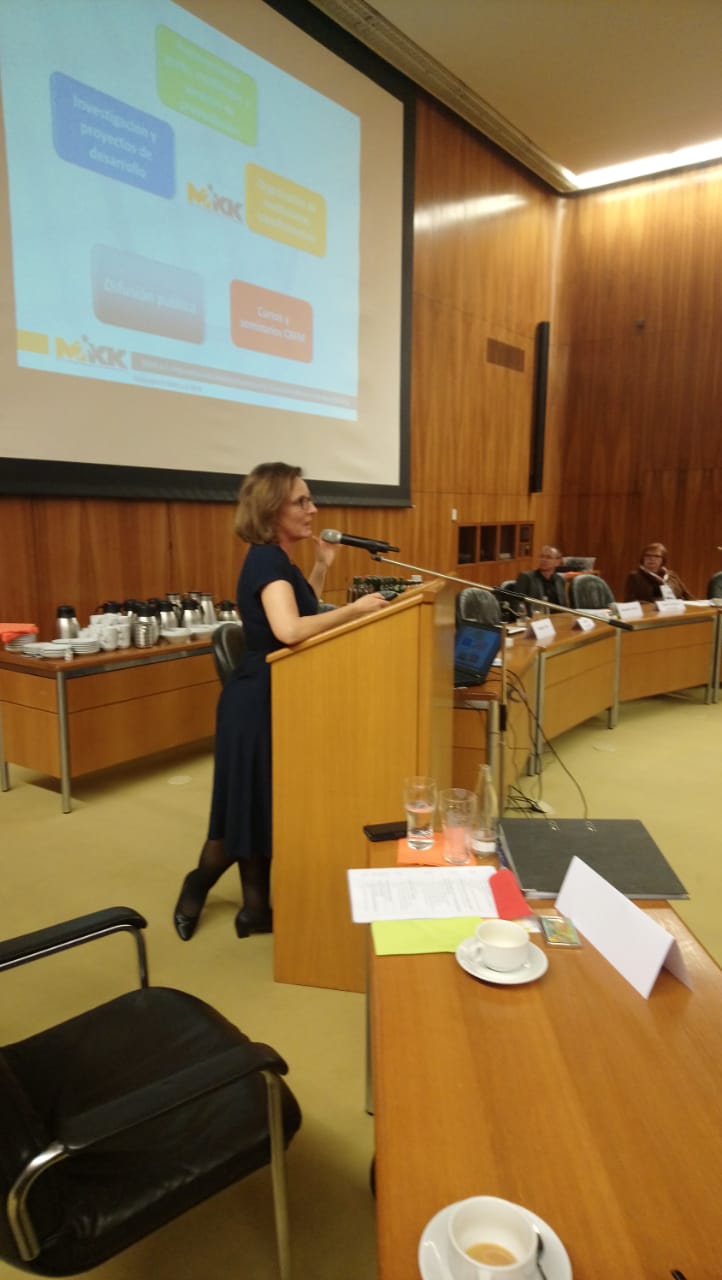
Expositora: Dra. Silvia A. Sejas Pardo, Presidenta de la Asociación Clamís, Abogada colegiada en Barcelona España y en Buenos Aires Argentina, especializada en mediación transfronteriza en casos de sustracción de niños por la Mikk -Asociación Alemana de Mediación Familiar y prevención en sustracción de niños-. Es miembro de Cross Border Family Network con sede en Bélgica (ChildFocus), Miembro de Mikk-ev.de y de la International Social Service Ginebra Suiza. Asesora Legal Ad-Honorem en Foundchild, Fundación de Gabriela Arias Uriburu. Docente en GCBA. Posgrado en Mediación, Social Comunitaria y Familiar por FUNIBER. Junto con el español y el catalán, también cuenta con fluidez en Inglés e Italiano.

International Child Abductions Draw Outcry on Capitol Hill

Capitol HIll: Fighting back tears before a Senate panel, American physician Chris Brann on Tuesday recounted the abduction of his son, Nicholas, who was taken to Brazil in 2012.


FILE - Fathers who lost their children to spousal abduction to Japan hold photos of their children during a news conference on Capitol Hill in Washington, May 5, 2010 In 2013, Japan’s parliament approved joining the 1980 Hague Convention on international child abduction, a global child custody treaty, amid foreign concerns that Japanese mothers can take children away from foreign fathers without recourse.


"This is best described as a living death," Brann said in a halting, emotion-laden voice. "He [Nicholas] was 3 years old when he was unilaterally ripped out of my life, moved to a country he had never lived in, to a language he didn't speak, to a culture he didn't understand."

Brann added, "I've never been allowed to be there for his birthday, to be there for Christmas. You can't know what that feels like until you've been in that situation. As a father, there are times I feel like a failure because I wasn't able to protect my boy."

Hundreds of cases yearly

Nicholas was taken by his Brazilian-born mother, Brann's ex-wife. The case is not unique. Hundreds of international child abductions by parents are reported in the United States each year.

According to State Department officials, the return rate hovers at about 45 percent. U.S. lawmakers of both parties say America can and must do a better job recovering its youngest citizens and preventing such abductions in the first place.

Judiciary Committee Chairman Chuck Grassley, R-Iowa, talks with the committee's ranking member, Sen. Dianne Feinstein, D-California, on Capitol Hill in Washington, July 12, 2017.

"There's more Congress and the executive branch can do to end the kidnapping of these children," Senate Judiciary Committee Chairman Chuck Grassley, an Iowa Republican, said.

Hague Convention

The United States is one of 82 signatories to the 1980 Hague Convention to combat international child abduction, which commits nations to expeditiously return minors illegally taken abroad by a parent.

U.S. law also speaks to the issue. The 1993 International Parental Kidnapping Crime Act established federal penalties for a parent who removes a child from the United States in violation of another parent's custodial rights.

The 2014 International Child Abduction Prevention and Return Act gives the State Department wide latitude to punish nations that fail to cooperate in resolving overseas abduction cases involving American children, from public condemnations to suspending U.S. developmental and security assistance to canceling state visits.

Testifying before the Judiciary Committee, Assistant Secretary of State for Consular Affairs Carl Risch admitted the department has used the 2014 law's provisions sparingly, issuing diplomatic protests rather than imposing stronger measures on nations that do not assist in the return of abducted U.S. children.

"Continued diplomatic engagement is our best tool to promote long-term institutional changes in foreign governments," Risch said.

'We're so sorry'

Brann disagreed, noting that nothing the State Department has done so far has convinced Brazil's judiciary to reunite him with his son. Brann compared the State Department's reluctance to sternly punish uncooperative countries to a doctor who refuses to use the strongest medical tools to treat an illness.

"When the State Department says we are going to continue to engage diplomatically, what they are saying is that they are just going to pat me on the shoulder and say, 'We're so sorry that has happened,' " he said.

Another witness testified to the power of heightened pressure on foreign countries. In 2011, Kentucky resident Noelle Hunter's ex-husband took their 5-year-old daughter, Muna, to Mali. The Senate's Republican leader, Mitch McConnell, spearheaded a sustained effort by Kentucky's congressional delegation to compel Malian officials to return Muna. The campaign succeeded and Hunter brought her daughter back to America in 2014.


"If every member of Congress with kidnapped constituents would begin to regularly inquire of federal agencies and the [foreign] nations in which they are held, these children are going to come home," Hunter said.

A numbers problem

The committee's top Democrat, Dianne Feinstein, applauded the concept of increased activism by lawmakers but noted that her state, California, has hundreds of parents with a child missing abroad and only two senators representing all of them.

"How do you do 300 cases [in California] like your state was able to do for you?" Feinstein asked, adding that an intervention by members of Congress is "possible to do, but it's not possible to do it every day of the year."

Rather, Feinstein said, the solution is to "increase the clout of the State Department and others to move more personally on this [issue]."

Federal officials stressed that preventing abduction is the best outcome, adding that a program is in place to mobilize U.S. Customs and Border Protection agents when a child at risk of international abduction is identified.

"We can enter lookouts in our system if there are any attempts to travel [depart the United States]," said Don Conroy, who directs the agency's National Targeting Center. "Returning the child is sometimes very complex. Prevention is a key piece of this."

Lawmakers of both parties stressed they want to see more done.

"I've seen the extremes we go to recover people who have been held hostage and the like, but we're not doing that for children," New Jersey Democratic Senator Cory Booker said.

Lawmaker: U.S. needs to pressure Japan to comply with international child abduction laws


Japan remains a haven for parental child abductions and a U.S. lawmaker Wednesday urged the Trump administration to do more to pressure the country to fulfill its obligations under international law.

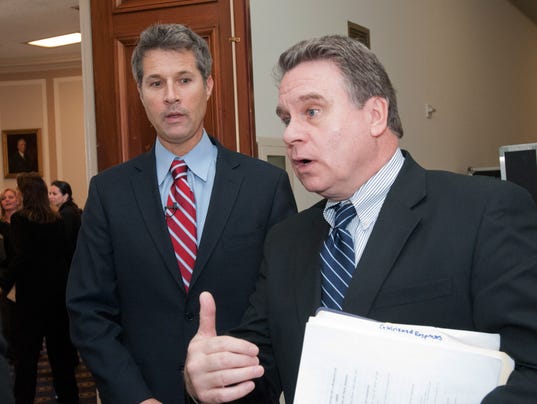
Rep. Chris Smith, R-N.J., said during congressional testimony that between 300 and 400 children of international marriages have been abducted from the U.S. to Japan since 1994, and that more than 35 are still awaiting reunification with their American parents.

“Every day these children are separated from their U.S. parent, the damage compounds,” Smith said before a Congressional subcommittee on global human rights. “We must do better. We must not leave any child behind.”

Under international pressure, in 2014 Japan signed The Hague Convention on International Child Abduction. The treaty requires the government to set up a process to allow foreign parents to appeal for visitation or return of their children. But Japan has been slack in administering the convention, according to Smith.

“How many of these children have come home four years later?” asked Smith. “How many even have access to their left behind parent now? Almost zero.”

James Cook, a Minnesota medical device specialist trying to gain custody of his four minor children from his estranged Japanese wife, also testified before Congress. 

In July 2014, his Japanese wife Hitomi Arimitsu took their children to Japan to visit her family and refused to return. Cook submitted an application for return under the Hague treaty and the case has made its way through both the Japanese and American court system, but Cook has still not been able to see his children.

A Minnesota court ordered the return of Cook’s children in 2017, but the ruling wasn’t carried out in Japan.

A key issue is that Japan does not have a way of enforcing its Hague commitments. It requires the abducting parent to voluntarily turn the children over and doesn’t allow the use of force in extracting the children. There have been numerous cases of parents simply refusing to comply with the Hague rulings.

Cook’s wife petitioned a Japanese court against the ruling to return the children and it was overturned, a decision which Japan’s Supreme Court upheld in December 2017.

“[My wife] has achieved the perfect consequence-free abduction with the aid of Japan’s systemic non-compliance and [the US Department of State’s] inaction,” Cook said in his testimony.

“After over 2.5 years in this process, I have nothing,” he said. “This process has cost me everything.”

Attention to the issue within Japan has been growing in recent weeks. Last month, all EU Ambassadors to Japan signed an official letter of diplomatic protest to pressure Japan to follow international law and enforce decisions which give an international parent custody or visitation rights.

Also in March, Japan’s Supreme Court ruled that a Japanese mother who is refusing to return her child to their father in the United States is "illegally restraining" the child under the Hague Convention.

It was the first such ruling by a Japanese court.

The court ruling and international pressure are a cause for optimism, according to John Gomez, an American who is chairman of the Kizuna Child-Parent Reunion group in Japan.

Gomez said that barriers remain, including an underlying “continuity principle” in Japanese courts means that the abducted child stays with the abducting parent. 

“Until the ‘continuity principle’ by which judges in Japan issue rulings is actually discarded and kidnapped children are returned, we must keep pushing to the utmost for the children to be returned to their loving parents,” said Gomez.

Rep. Smith said in his testimony that the State Department needs to apply more pressure on Japan and other countries that have refused to cooperate in returning abducted children. A 2014 law that Smith sponsored, the Goldman Act, requires the State Department to develop an agreement with Japan about children that had been abducted and to hold Japan accountable. 

However, Smith said that no action has been taken against Japan for past or current cases, and the State Department hasn’t even listed Japan as “non-compliant” in its annual report on the Hague convention.

“We hope that the State Department will do its job and implement the Goldman Act,” Smith said. “We hope that the Trump Administration will be different than the last.”

Fuente Usa Today

Wolfsburg: Conferencia Mediación Internacional 13 de Abril 2018


La Embajada de México en Alemania y la Alcaldía de la ciudad de Wolfsburg invitaron a participar como ponente a Isabel Fernández de Castillejos, Abogada y Mediadora, Presidenta de Mikk y Vice-Presidenta de Clamís, sobre Mediación Familiar Internacional y Derecho.

Entre los miembros presentes destacan el Sr. Alejandro Rivera Becerra. Jefe de la Sección Consular y Beate Ebeling, Encargada de Equidad de Género de la Ciudad de Wolfsburg, Daniela Cevik, Directora de Dialog e.V. y Heide Kruse, Directora de Frauenhaus e.V. Albergues para mujeres.

UK Desperate dad makes public appeal to find twin daughters abducted by ex


A desperate dad is making a public appeal to find his twin daughters abducted by his ex.
Care worker Peter Linney, 41, has not seen 13-year-old Georgia and Olivia since mum Michelle McGinlay took them against his will to South Africa in March 2016.

She and her bouncer boyfriend Pietro Confalone are now on the run with them.
The girls have been made wards of court in the UK and South African authorities have been hunting for the family after their visas ran out two years ago.

Peter, who has spent his £20,000 life savings trying to track them down, said: “I just want my girls back. I spend every waking moment thinking about them.”

His nightmare began shortly after he split from McGinlay, 42, in 2006, having the girls to stay with him every other weekend.
“But whenever she got a new bloke, she’d be difficult about me seeing the twins,” says Peter.

In January 2016 he got a call from McGinlay’s eldest daughter from a previous relationship warning him her mum and South African Confalone, 55, were planning to emigrate with the girls.

When he confronted the pair they claimed it was just a three-week holiday – but in an anonymous call from a man two days later he was told they had one-way tickets.

Frantic Peter got his lawyer to warn McGinlay she would be breaking the law if she took their daughters abroad without his written consent. A month later McGinlay made a second attempt, calling Peter from Heathrow demanding permission. Again he refused.

“She used my refusals to brainwash the girls against me,” he says. “She told them I was trying to stop them going on holiday. They hated me for that. She urged them to ring me and be nasty, calling me ‘the sperm donor’. It was so upsetting.”

In March, they were gone. Peter found the girls had not been at school for a week so he contacted police who discovered McGinlay and Confalone had got the girls on a Gatwick flight to Dubai.

Peter, of East Grinstead, Sussex, says: “I can only think they must have faked my signature on a forged affidavit.”

He got the children made wards of court. Since then he found out where his daughters were with the help of the International Child Abduction Contact Unit, but he believes the South African authorities bungled paperwork and failed to have McGinlay arrested.

The family then disappeared – and Peter says the only clues he now has to where they are come from McGinlay’s mum, Maureen.

“She has told me they’re in an area called Hartbeespoort, but Michelle won’t tell her the address.

“I have no money left to travel to South Africa to look for them myself. Until I find them, I’ll never be happy.”

Sussex Police say they are working on the case. A spokesman said: “Extradition proceedings have been considered but are not being carried out at this time in consideration for the welfare of the children.”

Valladolid y Burgos, provincias con más menores desaparecidos en Castilla y León


El informe del Centro Nacional de Desaparecidos con datos de 2017 revela que en Castilla y León hay 35 denuncias «activas» de menores que han desaparecido y sobre los que sus familias no tienen noticia alguna sobre su paradero. Dos son las provincias donde más denuncias de este tipo se han recogido por parte de las Fuerzas y Cuerpos de Seguridad, Valladolid y Burgos que, con 8 denuncias cada una, casi suman la mitad de las desapariciones notificadas. Les sigue la provincia de Segovia, con 5, y luego Salamanca (4), Palencia (3) y Soria (3), Ávila (2) y León (2). Zamora fue la única provincia de la comunidad en la que el año pasado no se registró denuncia alguna por desaparición de niños o adolescentes.

Capítulo especial tiene la sustracción de menores, una conducta delictiva que puede cometer tanto el progenitor que no tiene la titularidad de la custodia del niño como el que sí la tiene. Y no solo los padres, sino otros parientes, como abuelos o tíos (hasta segundo grado de consanguinidad) pueden incurrir en este delito.

«La violencia en casa está detrás»»

Diana Díaz, la directora del teléfono Anar, un servicio de interés social europeo que gestiona esta Fundación desde 2010, señala que las llamadas que reciben no se corresponde con fugas de centros de menores sino que, en un alto porcentaje, tienen que ver con situaciones de violencia en el seno familiar. «Normalmente no son fugas, son desapariciones que no obedecen tanto a problemas de conducta como a situaciones muy conflictivas no resueltas en la familia que se enquistan y, muchas veces, de violencia en casa», señala esta psicóloga. Casi siempre son chicas adolescentes, que proceden de entornos diferentes, no siempre se trata de familias con problemas económicos. Más de la mitad son de nacionalidad española y viven con la madre. Tras su último informe, en el que se constata un progresivo incremento de dicha violencia contra los menores en las familias, la Fundación Anar ha puesto en marcha una recogida de 250.000 firmas para pedir al Gobierno que se tramite de urgencia una Ley Integral contra la Violencia a la Infancia y Adolescencia.

En Castilla y León, el año pasado se contabilizaron 8 denuncias por sustracción de menores: 2 en Ávila y el mismo número en Burgos y Valladolid, 1 en León y otra en Segovia. Se han incrementado respecto de 2016, cuando se contabilizaron 5 denuncias por secuestro parental de menores y se iguala el dato de 2012, de forma que el de 2017 es el más elevado de los registrados en el último lustro, aunque sigue estando muy por debajo de las cifras de sustracción de menores registradas en otras comunidades como Cataluña (67) y Andalucía (52).

Gratis y confidencial

Uno de los apoyos más sólidos en la detección e investigación de la desaparición de menores de que dispone el Ministerio del Interior desde 2010 es el teléfono gratuito y confidencial 116 000 de ámbito europeo que gestiona la Fundación Anar. Según su último informe, con datos de 2016, se recibieron de Castilla y León 189 llamadas, de un total de 2.211 registradas por desapariciones de 344 niños en toda España, tanto por fuga (57,85%) como por sustracción (17,4%), menores migrantes no acompañados (1,5%), pérdidas, accidentes (2,6%) y secuestros por terceros con fines criminales (0,9%). Así como entre los adultos son los varones los que engrosan la lista de desapariciones, en el caso de los menores la mayoría son chicas de 16 y 17 años (45,3%). Por debajo de los 7 años figuran los secuestrados por uno de sus progenitores (13,5%). En el 19,8% de los casos conocidos, estos chicos fueron expulsados de su hogar. Son casos especialmente difíciles de resolver.


Japan: (Eng subs) Racist journalists discussing about the Hague Convention.


We are in 2018, but here is the racism that you still find in the Japanese society nowadays.
Enjoy these two journalists commenting on the first ever decision made by the Japanese Supreme Court to return a kidnapped child to the father. 
For the first time in history, the Hague Convention has been correctly applied in Japan, despite the fact it took 2 years to reach this decision rather than the 6 weeks implied by the convention.

Estamos en 2018, pero aún hay racismo en la sociedad japonesa de hoy. Estos dos periodistas comentan la primera decisión tomada por el Tribunal Supremo Japonés sobre la devolución de un niño secuestrado al padre en US, llaman a la Convención de La Haya, una Convención estúpida y cuestionan como se puede permitir la devolución del niño a un país de gente "blanca". Según los periodistas, que Japón haya suscripto el convenio fue  algo innecesario.
Por primera vez en la historia, la Convención de La Haya se aplicó correctamente en Japón, a pesar que se demoraron 2 años en obtener esta resolución en lugar de las 6 semanas que menciona el Convenio. Subtítulos en Inglés.

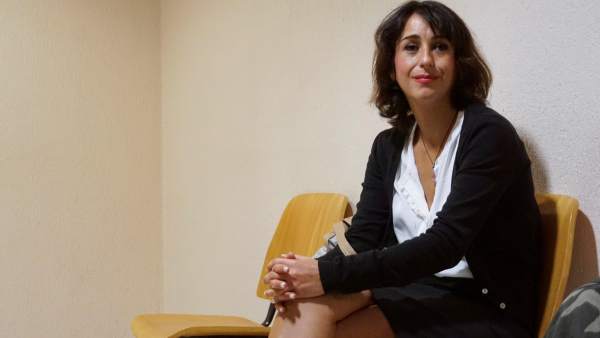
Juana Rivas entrega sus dos hijos a su expareja en Italia

Juana Rivas ha entregado este jueves sus dos hijos, de 12 y 4 años, a su expareja, el italiano Francesco Arcuri, en una comisaria de Ca...